Supply Chain Management
Principles and System of Supply Chain Management
The Tokyo Electron Group joined the Responsible Business Alliance (RBA), an industry coalition dedicated to responsible business conduct in global supply chains, in June 2015. The RBA established the RBA Code of Conduct* to promote improvements in human rights and labor, health and safety, the environment, and ethics throughout the supply chain.
To build a supply chain that is sound and sustainable, we have formulated a procurement policy based on the laws, regulations and social norms of each country, as well as the RBA Code of Conduct, and together with our suppliers, we are implementing activities based on this policy. We are also working to build relationships of trust with our suppliers, including material suppliers, staffing agencies, contracting companies, customs-related operators and other logistics companies, and facility management companies, who support our business as partners. Through ongoing communication with our suppliers, we identify issues in the supply chain from a variety of perspectives, such as human rights and labor, health and safety, the environment and ethics. These issues are shared among the relevant departments which then work on improvement measures, under the supervision of the Representative Director, President & CEO. We will continue to strive to create value across the supply chain by working with our suppliers to deploy our operations in compliance with global standards.
The high-value manufacturing that the Tokyo Electron Group strives for is based on the functions of all materials and components that make up the products and the pursuit of high quality. We value communications with suppliers and seek to grow manufacturing on a global scale with our suppliers based on ongoing trusting relationships.
May 1, 2010 Established
- Compliance with Applicable Laws, Social Norms, and the RBA Code of Conduct
- We engage in procurement activities based on business ethics and with integrity, in compliance with the laws, regulations, and social norms of each country as well as the RBA Code of Conduct.*
The RBA Code of Conduct: Responsible Business Alliance Code of Conduct
https://www.responsiblebusiness.org/code-of-conduct/
A code of conduct drawn up by the RBA. The RBA Code of Conduct establishes standards to ensure that working conditions are safe, that workers are treated with respect and dignity, and that business operations are environmentally responsible and conducted ethically. - Priority on the Environment
- We conduct procurement with full consideration for reduction of environmental impact and protection of the global environment.
- Fair Business Practices
- We continuously seek high-value technologies and create broad opportunities for their business transactions based on the precondition of open competition.
- Partnership
- We prioritize relationships of trust based on mutual understanding with suppliers and conduct activities in the pursuit of mutual continuous growth.
- Information Management
- We properly manage the confidential information of suppliers that we obtain in the course of business
May 1, 2010 Established
September 1, 2024 Revised
The Tokyo Electron Group strives to comply with our Code of Ethics and the RBA Code of Conduct* to contribute to the development of society. We request that our suppliers understand the purpose of these policies and implement them and that their suppliers are also asked to understand and implement these policies.
We aim for sound and sustainable growth together with our suppliers.
- Compliance with Applicable Laws, Social Norms, and the RBA Code of Conduct
We request our suppliers to comply with the applicable laws and social norms in the countries and regions where they engage in business, as well as the RBA Code of Conduct. Please observe the following items in particular.- Prohibition of child labor, forced labor and labor involving debt bondage
- Management of appropriate working hours, breaks, holidays and leaves
- Appropriate payment of wages
- Respect for fundamental human rights, beginning with the prohibition of discrimination and inhumane treatment
- Thorough implementation of business ethics, beginning with the protection of intellectual property rights and the prohibition of false reports, falsification of records, bribery and conflicts of interest
- Compliance with export/import-related laws and regulations
- Prohibition of involvement with antisocial forces
The RBA Code of Conduct: Responsible Business Alliance Code of Conduct
https://www.responsiblebusiness.org/code-of-conduct/
- Considerations of Human Rights and Working Conditions
-
The Group promotes activities based on the Tokyo Electron Group Human Rights Policy. We request that our suppliers respect human rights and create a safe and healthy work environments in their business activities as well, based on their understanding of our Group’s Human Rights Policy.
Tokyo Electron Group Human Rights Policy - Response to the Responsible Procurement of Minerals
-
The Group sees our efforts with regard to the responsible procurement of minerals as part of our corporate social responsibility and promotes all efforts to eliminate any use of raw materials that utilize minerals which have been mined or extracted by illegal methods as well as components or parts that contain such minerals. To this end, we are implementing measures in accordance with the OECD Due Diligence Guidance for Responsible Supply Chains of Minerals from Conflict-Affected and High-Risk Areas. We request that our suppliers understand the situations pertaining to the procurement of minerals and cooperate in the survey for the responsible procurement of minerals.
- Environmentally Conscious Activities
-
In accordance with our Green Procurement Guidelines, we request that, together with the acquisition of ISO 14001 and the development of a structure for environmental conservation, suppliers also actively engage in the utilization and manufacturing of parts and materials that reduce environmental impact and that consider environmental conservation, the conservation of resources and the reduction of greenhouse gas emissions, and in addition, that they strive for biodiversity and forest conservation.
- Management System
-
We request that management systems are developed and continuously improved, including systems related to safety, health, the environment, product quality and labor, in accordance with the corporate procurement agreement or any specific agreements or arrangements with the Group.
- Technical Skills
-
We request that suppliers always strive for improved technical skills and technological innovations.
- Quality
-
We request that suppliers provide high-quality products and services which meet the specifications required by the Group by means of building quality during the design phase and strengthening change control.
- Supply, and Provide Systems
-
We request that suppliers provide a stable and flexible supply of products and services to deal with huge volatility in demand. Also, we request that suppliers prepare precautionary steps and continuity plans to reduce risks in the event of unforeseen situation such as disaster. In addition, we conduct BCP assessments on target suppliers and ask for their cooperation in these activities.
- Price
-
We request that products and services are offered at market-competitive and reasonable prices, and that continuous effort is made to reduce costs.
- Business Management
-
We request that sound and stable business management be implemented for the continuation of our business transactions. We also request that necessary financial and company information is disclosed.
- Information Security
-
In accordance with our Information Security Standards for Partners and Affiliates, we request that suppliers put a system in place that deals with the leaking of confidential information and cyberattacks, and construct an information security environment that appropriately manages and utilizes information. We also request for your cooperation in ensuring the security of our products.
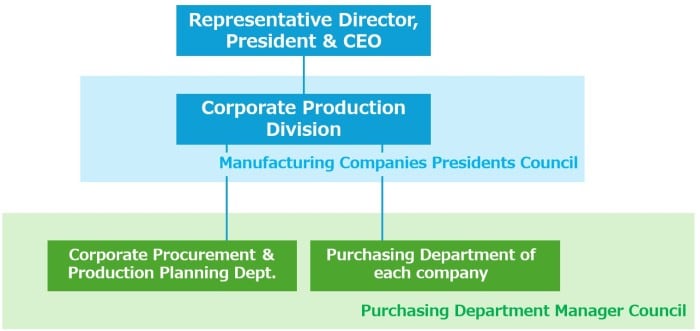
To maintain a robust supply chain capable of supporting streamlined product manufacturing, we have instituted a procurement policy and established a system for administering fair procurement practices based on mutual trust with suppliers. Under the Representative Director, President & CEO as the top of the procurement system, the Manufacturing Companies Presidents Council and the Purchasing Department Manager Council are convened to share information on various procurement issues. The council also serves as a venue to address current problems and discuss approaches to improve partnership with suppliers.
Sustainability Operations
Initiatives with Suppliers
To promote quality improvement of the Tokyo Electron Group and implement sustainability in our supply chain, it is essential to build strong partnerships with diverse suppliers, including materials suppliers, staffing agencies and contract companies, logistics suppliers including customs-related businesses, and facility management companies.
Before starting business with new suppliers, a Supplier Total Quality Assessment (STQA)—our Group’s in-house assessment system—is conducted via self-assessment to confirm their management system for product quality, costs, and information security. The assessment also includes Corporate Social Responsibility (CSR) issues in ESG-related areas, including human rights, ethics, safety, and the environment. We also conducted screening using STQA for new suppliers in fiscal year 2026.
For quality, we conduct on-site audits, and if any risks are found, we explain to the supplier the defects and our expectations for the level of quality that we require. After the supplier understands the issues, we ask that they plan and implement improvement measures. We also offer continual support to suppliers until all necessary improvements have been made.
After we begin a business relationship, we also conduct on-site audits once every three years at suppliers who manufacture important components and at suppliers where quality issues have been detected.
Also, to build a sound and sustainable supply chain, we request the cooperation of suppliers in accordance with our Procurement Policy - Supplement: Requests to Our Suppliers. We request that suppliers comply with the RBA Code of Conduct, which requires respect for the human rights of workers, and that they cooperate with various assessments relating to sustainability, security, the environment, and other matters. These assessments are conducted on an ongoing basis. If no improvement is observed and the risk increases significantly to the extent that could have a major impact on business continuity, we will support corrective actions and, depending on the progress of such efforts, take appropriate measures, including suspending our business relationship with the supplier.
RBA Programs
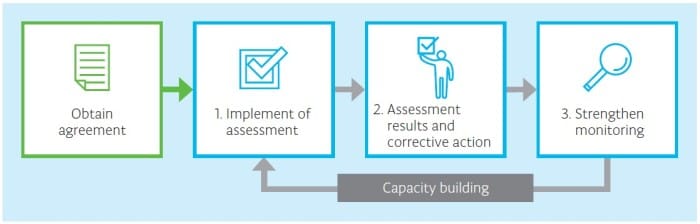
Obtain agreement
To ensure that all workers in our supply chain can work of their own free will, we have stipulated our zero-tolerance policy for forced labor and bonded labor in the Tokyo Electron Group Human Rights Policy. To ensure that these efforts are also implemented by suppliers, we ask them to sign an agreement confirming their understanding of and compliance with the RBA Code of Conduct, which respects the rights of workers.
TEL Supply Chain Sustainability Assessment (TSSA)
(1) Conduct Assessments
We identify business impacts and various risks and conduct screening of suppliers that require prioritized and ongoing monitoring of their sustainability performance. We conduct the TEL Supply Chain Sustainability Assessment (TSSA), an annual sustainability assessment that targets suppliers selected through this screening process.
Assessments started in fiscal year 2014 with materials suppliers*¹, were expanded in fiscal year 2019 to include staffing agencies and contract companies*², and logistics suppliers*³, and were further expanded in fiscal year 2022 to include facility management companies.
Materials suppliers: Suppliers accounting for more than 85% of our procurement spend
Staffing agencies and subcontractors: 100% of employment agencies and subcontractors
Logistics suppliers: 100% of customs brokerage service providers
(2) Assessment Results and Corrective Actions
For the TSSA, we assess the risks of countries in which our suppliers conducts business as well as the inherent risks associated with their business operations or products and then confirm the status of initiatives related to labor, health and safety, the environment, ethics, and human rights, rating them on a three-level scale: low-risk, medium-risk, and high-risk. Feedback on the assessment results is provided individually to all suppliers subject to the TSSA, and we request corrective actions for any identified risk items. In particular, in case where a supplier is not compliant with any of our priority focus areas, we ask that they prioritize appropriate corrective actions.
(3) Strengthen Monitoring
We strengthen monitoring of suppliers for which risks are identified in specific areas and support their improvement activities. In fiscal year 2026, we selected 48 suppliers for individual monitoring and, through interviews and other communication, confirmed their corrective action plans, corrective actions taken, and completion status.
(4) Capacity building
We hold annual online briefing sessions for our suppliers concerning the TSSA results, explaining the latest results and key points for corrective actions in each item. We also request that suppliers make efforts toward corrective actions.
The briefings are held each year, and approximately 900 participants from our suppliers attended the briefing in May 2026. We explained our Group’s supply chain initiatives and the assessment program. We also support the efforts of each supplier by providing guidance on the RBA Code of Conduct and sharing best practices for corrective action implemented by other companies.. Through these initiatives, we promote a better understanding of our requirements among suppliers and encourage their proactive improvement efforts.
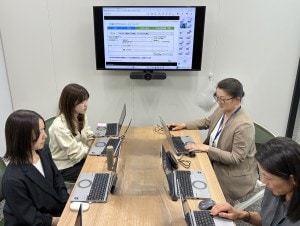
Online briefing session
Annual Sustainability Goals and Results for Supply Chain Management
| Target | Fiscal Year 2026 Results | Future Initiatives |
|---|---|---|
|
|
|
In fiscal year 2026, we conducted the TSSA targeting 707 materials suppliers, staffing agencies and contract companies, logistics suppliers including customs-related businesses, and facility management companies for which priority and ongoing confirmation of the status of sustainability initiatives is necessary. We received responses from all suppliers.
As a result of the assessment, 88.8% of suppliers were evaluated to be low risk and 11.2% were evaluated to be medium risk, with no high-risk suppliers identified. We also selected 48 suppliers for individual monitoring and confirmed their corrective action plans, details of their corrective measures, and completion status through interviews and other communications. As a result, as of the end of June 2026, we confirmed that 37 of the 48 suppliers had completed corrective actions. As some corrective actions require additional time to complete and involve medium-term initiatives, we will continue to support the remaining suppliers in fiscal year 2027 and, monitor their progress.
FY2026 Supply Chain Sustainability Assessment Implementation Results
| Number of suppliers subject to assessment | 707 |
|---|---|
| Assessment response rate | 100% |
| Number of suppliers with priority negative risks requiring corrective action | 48 |
| Number of suppliers with corrective action plans for identified priority risks | 46 |
| Number of suppliers under corrective action support and monitoring | 46 |
| Number of suppliers whose business relationships were terminated based on their corrective action plans and implementation status | 0 |
Ongoing Efforts with Suppliers
Example initiative
Tokyo Electron Technology Solutions (Tohoku Office) conducts activities to prevent quality issues jointly with suppliers. By implementing STQA for suppliers, we confirm their quality management systems and respond to issues. However, defects still occur in our manufacturing process, we launched a Supplier Quality Improvement Program (SQIP) to investigate and analyze the root cause of quality issues . In addition, under this program, for certain suppliers with high defect rates, we delve deep into defects that have already occurred to prevent reoccurrence and consider their repercussions, and focus on preventing other similar defects. The goal is to reduce the defect rate by 50% through ongoing efforts with suppliers and contribute to the further improvement of the relationships of trust with suppliers.
Responsible Sourcing of Minerals
The Group takes a sincere approach, as part of our corporate social responsibility, to the sourcing of minerals mined or extracted using illicit methods associated with human rights abuses or labor issues. We maintain a policy of eliminating the use of raw materials or components containing such conflict minerals.
Pursuant to this policy, we conduct responsible mineral sourcing surveys every year in accordance with the OECD*¹ Due Diligence Guidance for Responsible Supply Chains of Minerals from Conflict-Affected and High-Risk Areas. In fiscal year 2026, we conducted our 12th survey, targeting 3TG*² and cobalt as the minerals subject to investigation.
We identify survey targets based on the parts and materials purchased and conduct surveys to identify smelters using the CMRT*³ and EMRT*⁴. Using this survey, we identified 293 smelters compliant with RMAP*⁵, which is one basis for determining non-involvement in conflicts. At the time of the survey, we request suppliers to disclose the countries of origin of the mines used and strive to ascertain the countries of origin. As a result, we found no procured items containing 3TG or cobalt mined or extracted through illicit means.
If any significant concerns are identified, we will work closely with suppliers to take prompt corrective action. We share survey results with suppliers, request switching over to RMAP*⁵-certified smelters, and continue to conduct due diligence activities to improve survey accuracy.
OECD: Organisation for Economic Co-operation and Development
3TG: Tantalum, tin, tungsten and gold
CMRT: Conflict Minerals Reporting Template. Survey format for reporting conflict materials, provided by the Responsible Minerals Initiative (RMI), which has established international guidelines on conflict minerals.
EMRT: Extended Minerals Reporting Template. A survey format provided by RMI for reporting on extended minerals such as cobalt, similar to CMRT.
RMAP: Responsible Minerals Assurance Process.A program promoted and led by the RMI for auditing smelters/refiners to validate that they do not use conflict minerals.
Responsible Mineral Sourcing Due Diligence Process
| ①Establishment of supplier management system
|
|---|
|
▼
| ②Identification and assessment of supply chain risks |
|---|
|
▼
| ③Development of corrective action plans to identified risks |
|---|
|
| FY2022 | FY2023 | FY2024 | FY2025 | FY2026 | |
|---|---|---|---|---|---|
| Number of RMAP compliant smelters identified
|
243 | 234 | 238 | 298* | 293 |
| Rate of identification | 100% | 100% | 100% | 99%* | 99% |
* From the fiscal year 2025 survey, cobalt has been added to the target minerals alongside 3TG (tantalum, tin, tungsten, gold).
Procurement BCP
As part of our business continuity plans, we collaborate with suppliers on ongoing disaster preparation. This entails preparing for geopolitical and other risks by using multiple suppliers for our major parts and materials and jointly using and developing low-risk parts and materials, to build a highly secure and flexible supply chain. In addition, to appropriately grasp the increasingly complex supply chain, we enhance the entire supply chain visibility by leveraging IT systems. We also conduct BCP assessments of our suppliers and analyze the responses to provide feedback, leading to improvements in areas of concern.
| FY2022 | FY2023 | FY2024 | FY2025 | FY2026 | |
|---|---|---|---|---|---|
| Percentage of suppliers subject to the supply chain BCP assessments | At least 85% | At least 85% | At least 85% | At least 85% | At least 85% |
| Rate of improvement after supply chain BCP assessment | 24.4 | 22.2 | 20.4 | 19.3 | 24.1 |
Environmental Initiatives
With the cooperation of our suppliers, we are promoting green procurement, prioritizing the purchase of environmentally friendly parts, products and materials. We also conduct surveys on product environmental laws and regulations for all parts and products purchased from suppliers, and we do not use parts or products containing chemical substances expected to be regulated in various countries. Rather, we switch to alternative products instead.
We also strive to establish and strengthen our environmental supply chain management through E-COMPASS initiatives. At the annual TEL E-COMPASS Day, we report on our E-COMPASS activities, provide the latest environmental information, and share information about activity policies. At the same time, we promote environmental initiatives across the entire supply chain together with our suppliers. We also grant the “Environmental Partners” to suppliers that especially cooperate in and contribute to our environmental efforts through E-COMPASS activities and certify them as "Green Partners."
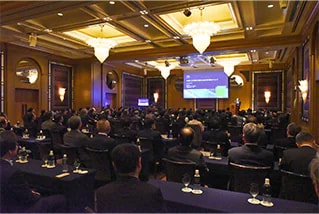
In March 2026, we held the TEL E-COMPASS Day 2026, our fifth environmental activity briefing session for suppliers. The event was held in a hybrid format combining an in-person venue with online participation, and 539 participants from suppliers attended. At the briefing, we shared updates on the progress of E-COMPASS activities and initiatives to achieve net zero. and provided detailed explanations of environmental education materials, support plans, and the selection criteria for Environmental Partners and Green Partners. We also held a networking reception for approximately 50 participants from suppliers who attended in person, providing a valuable opportunity to deepen relationships by sharing information on challenges and other matters.
Building of Partnerships
In addition to daily communication, we disseminate and share information on our business plans, market trends, business policies, and sustainability initiatives through the annual “TEL Partners Day”, an annual event held to strengthen relationships with suppliers, as well as through Production Trends Briefings held twice a year by each domestic manufacturing company. At “TEL Partners Day” event, we recognize suppliers that have received out-standing evaluations in area such as quality improvement, on-time delivery, cost reduction measures, BCP assessment, and TSSA as “Excellent Partners”.
In environmental activities as well, we award Environmental Partner recognition to suppliers with outstanding initiatives, expressing our appreciation for their cooperation and requesting continued understanding and collaboration in building a sound and sustainable supply chain.
Since fiscal year 2025, we have held the “TEL Supplier Summit” as an opportunity for building partnerships with a focus on core technology. We work with suppliers to develop technology and further strengthen the supply chain.
Source : Tokyo Electron
Education
Our Group conducts web-based sustainability training for all employees, including buyers at manufacturing sites. We also hold study sessions for buyers on the requirements of RBA audit standards.
We distribute to suppliers a booklet titled “Introduction to Sustainability” that summarizes our requirements on sustainability initiatives and regulatory compliance efforts.
In addition, for suppliers cooperating with TSSA, we held an online briefing session to explain our RBA initiative plans and content and shared specific implementation methods and good practices as a means to help promote our suppliers' own RBA initiatives.
Examples of Initiatives by Overseas Group Companies
We hold events for suppliers every year, not only in Japan, but also at overseas subsidiaries, to express our gratitude for their support and to share information on the Group's management philosophy, status of our business , trends in the semiconductor industry, and initiatives related to net zero, sustainability, and other matters. Through these communication opportunities, we strengthen collaboration with suppliers while making Group-wide efforts with the aim of contributing to industrial development and to society and the environment.
Event Results
| Overseas Subsidiary | Last Year’s Results | Number of Events Held (Cumulative) |
|---|---|---|
| Tokyo Electron Taiwan | December 11, 2025 | 4 |
| Tokyo Electron Korea |
November 13, 2025 | 3 |
| TEL Manufacturing and Engineering of America | September 17, 2025 | 2 |
Partnerships with Suppliers
In September 2022 at our headquarters, and in February 2023 at Tokyo Electron Technology Solutions, Tokyo Electron Kyushu, and Tokyo Electron Miyagi, we announced our “Declaration of Partnership Building” in support of the objectives of the “Council on Promoting Partnership Building for Cultivating the Future,” promoted by the Cabinet Office, the Ministry of Economy, Trade and Industry (METI), the Small and Medium Enterprise Agency (SMEA), and others. We will continue striving to enhance value across the entire supply chain and build strong partnerships with our suppliers.
Our approach to RBA
Membership in the RBA
In June 2015, we joined the RBA*, a world’s largest industry coalition dedicated to responsible business conduct in global supply chains. RBA has stipulated the RBA Code of Conduct to promote improvements in labor, health and safety, the environment, and ethics through the supply chain. We adhere to RBA Code of Conduct and working to build a sound and sustainable supply chain in collaboration with other RBA member companies in Japan.
Supplier Hotline for Whistleblowing
The Tokyo Electron Group has a supplier hotline for whistleblowing with the aim of early detection and the prevention of compliance issues.