Learn about semiconductors
Semiconductors are vital to the development of a dream-inspiring society.
Below, we will answer some frequently asked questions about semiconductors.



Question 01
What is a semiconductor?
A semiconductor is a material that can control the flow of electricity or the
electronic parts made from that material.
Semiconductors sometimes conduct electricity and sometimes they don’t; they’re between conductors (which conduct) and insulators (which don’t).
Transistors and IC chips are made from semiconductor materials, and those chips are also called semiconductors.





Question 02
Why are semiconductors important?
Semiconductors are used in
almost every function of electronic devices.
Different types of semiconductors play different roles, and devices combine those roles. For example, they store information, capture data, and perform calculations. Without semiconductors, electronic devices cannot work.
Examples of semiconductors in a smartphone


How semiconductors
make digital devices work


Digital devices process information using binary, a number system that uses only 0 and 1. In electronics, 0 and 1 correspond to OFF and ON electrical signals.
Semiconductors act like switches that control whether electricity flows. By turning these signals ON/OFF very quickly, semiconductors let devices process complex information.


Question 03
What are semiconductors used for?
They are used in almost all electronic devices from everyday items
to cutting‑edge technology.
Semiconductors are in smartphones, PCs, home appliances, cars, and even satellites.
The advancement of semiconductors supports new technologies like generative AI and autonomous driving.
They also enable future advances such as quantum computing and 6G/7G, which could help solve social challenges in healthcare, transport, and climate.


Question 04
How will semiconductors evolve
in the future?
Larger capacity, higher speed, greater reliability,
lower power consumption
In addition to scaling technology to increase the integration of semiconductors on a chip, advanced packaging technology, which integrates multiple chips and functions into a single package, is also evolving. Combining these technologies, semiconductors will continue to achieve even higher performance.
Scaling

Advanced Packaging


Question 05
If semiconductors evolve,
how will the world change?
Achieving both Digitalization and Decarbonization
towards a Digital & Green world.
As digitalization advances, increasing power consumption becomes an issue.
Advances in semiconductors will realize technologies for decarbonization and lower power consumption of various electronic devices.


Why semiconductors lead to decarbonization

Technologies that lead to a Green society
Electric vehicles and renewable energy power generation systems require large amounts of data processing. The evolution of semiconductors will also play an important role in environmental technologies like this.

Decarbonizing the manufacturing process
TEL's semiconductor production equipment reduces CO2 emissions during use. This enables high-performance, highly efficient, and environmentally-friendly semiconductor manufacturing.
To realize a dream-inspiring society, Tokyo Electron drives technological innovations of semiconductors.
Almost all semiconductors around the world are produced using TEL’s equipment.
TEL creates technologies that do not yet exist while building a more prosperous society.


To find out more about semiconductors, please refer to the following resources.
Nanotech Museum
A website that explains the principles and history of nanotechnology
-

The Principle of Semiconductor
Basic facts about semiconductors explained in detail, along with glimpses into their progress and applications
-

The history of Semiconductor
An overview of the evolution of semiconductors from the invention of the vacuum tube to the present day
-
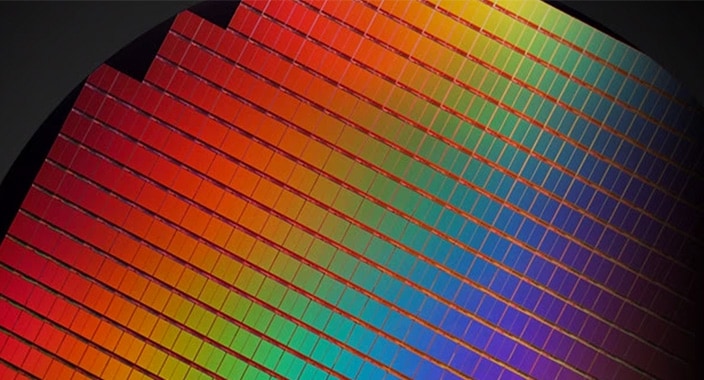
How a Semiconductor is made
An introduction to various processes of semiconductor manufacturing and the equipment designed to perform respective processing steps


TELESCOPE Magazine
TEL’s journal covering the latest advancements in semiconductors and other topics in science and technology