Safety
Our Approach to Safety and Health
Tokyo Electron Group upholds the principle of "Safety First" as part of our Corporate Philosophy. In accordance with this principle, we give the highest priority to the occupational safety and health of all individuals, including management, employees, and the employees of business partners working within and outside the Group, as well as our suppliers and customers, in various business operations such as development, manufacturing, transportation, start up, and maintenance. We set goals to improve safety and good health and strive for ongoing, proactive improvements.
Our Safety Policy and healthy work environments are approved by the CEO and the corporate director in charge of safety and are applied to not only management and employees but everyone involved in our business.
November 27, 1998 Established
July 30, 2024 Revised
- Safety First
- Based on the principle of "Safety First," we strive to maintain and improve safety and provide healthy work environments for all employees, including the employees of partner companies working within and outside the Group, as well as suppliers, and customers.
- Legal Compliance
- We comply with laws and regulations, as well as international rules, guidelines and internal regulations pertaining to safety and health.
- Roles of Management, Supervisors, Employees, and Other Parties Engaged in Business Operation
- Management ensures operations are conducted with a "Safety-First" mindset, and the supervisors regularly audit safety and health management systems for continuous improvement opportunities. As a preventative measure to prevent work-related incidents, supervisors collect opinions from the site about safety in a timely and appropriate manner. Employees and other parties engaged in business operations are expected to always have safety at the forefront of their minds and are responsible for enhancing the work environment to ensure it is safe for all workers and visitors on site.
- Safety Activities
- We establish appropriate targets based on quantitative evaluation and analysis of safety activities and formulate implementation plans aligned with our priorities.
Employee representatives and relevant parties participate in Safety and Health Committee to discuss safety activities, share issues, and explore corrective and preventative measures. We work to deploy safety activities Group-wide and pursue ongoing improvements.
- We establish appropriate targets based on quantitative evaluation and analysis of safety activities and formulate implementation plans aligned with our priorities.
- Risk Assessments
- We identify risks involved in business activities, implement countermeasures, and evaluate their effectiveness.
We conduct quantitative analysis about hazard sources, scopes of impact, and frequency. We assess the probability and severity of incidents, including natural disasters and implement countermeasures based on priorities.
- We identify risks involved in business activities, implement countermeasures, and evaluate their effectiveness.
- Safety Training
- To raise employee awareness about safety and to build safer workplace environments, we develop training programs corresponding to the job responsibilities of employees and relevant personnel which are implemented Group-wide.
- Product Safety
- We adhere to international safety standards, country regulations and industry guidelines to provide customers with safe and reliable products.
- Equipment Safety Training
- We strive to prevent equipment-related incidents by providing appropriate equipment training for employees, other related parties, and customers to enable safe equipment operation. We actively disclose safety information and work to improve safety on a global basis.
- Communication
- We recognize that the basis of safety activities lies in fostering trust-based relationships. Management, employees, and related parties will strive for effective communication between all related people, including customers.
- Response to Disasters and Major Incidents
- In the event of extensive damage due to an earthquake, storm, other natural disaster, or an incident, such as a fire, we will accurately ascertain the facts, prioritize protecting and rescuing human lives, and work together as one to quickly and calmly minimize losses, repair damage, and prevent recurrence. We have Business Continuity Plans in place in the event of a major incident and, will enact a Group-wide response under the direction of management, along with experts who will investigate the cause, and work to prevent recurrence.
Representative Director, President & CEO
Tokyo Electron Limited
We have established and operate a safety management system led by the CEO to provide a safe and secure working environment. Under the "Safety First" slogan, we have established the "Safety Policy" with the approval of the CEO and Corporate Officers Meeting, and inform all employees of the policy. We manage safety and health using an OHSMS*¹-based management system and implement the PDCA cycle to minimize the potential risk of work-related incidents and improve our safety and health management. We also progressively obtaining ISO 45001*² certification and carry out RBA*³ audits to ensure that our labor environments are safe.
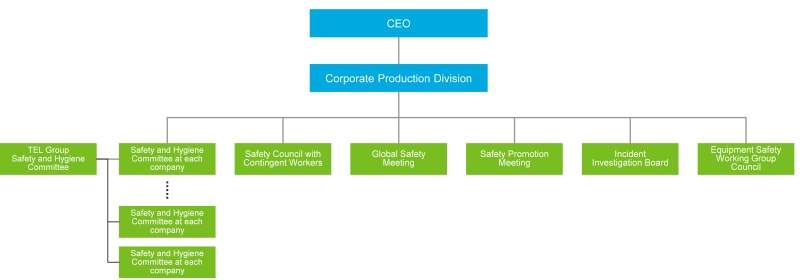
Occupational Health and Safety Management System. A management system to improve the overall level of safety and occupational health.
ISO 45001 is an international occupational health and safety standard. In the Tokyo Electron Group, Tokyo Electron Korea, Tokyo Electron Taiwan and Tokyo Electron Europe have acquired ISO 45001 certification.
The Responsible Business Alliance (RBA) is an industry coalition dedicated to responsible business conduct in global supply chains
Safety Activities
Global Safety Council
Personnel in charge of safety and safety representatives from all Group companies in Japan and overseas participate once every six months in the Global Safety Council to share the results of safety activities, incident information, and recurrence prevention measures and discuss targets for the following term. During the Global Safety Council, subcommittees for specialized fields are held where the issues and goals for each company are discussed among the personnel in charge. We also hold an annual TEL Safety Award ceremony to recognize outstanding safety activities across all divisions of the Group.
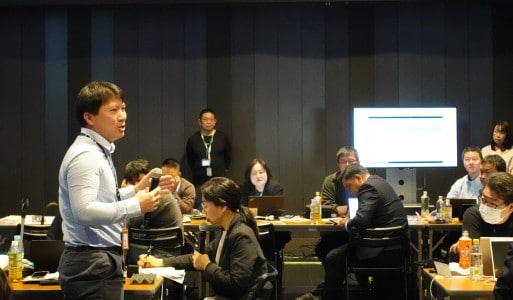
Global Council Held at Tokyo Electron Korea
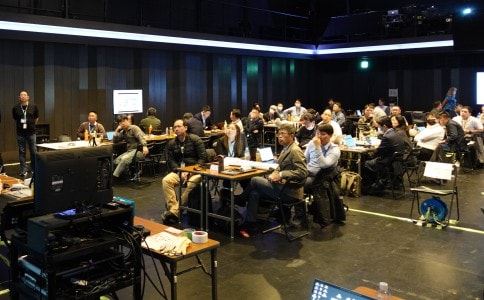
Safety Award Ceremony
Safety and Health Meeting
Safety and Health Meeting are convened monthly by employee representatives at each place of work. Participants discuss activities on workplace safety and employee health and safety and incorporate employees' opinion. Information from the Global Safety Council is shared to promote Group-wide safety initiatives throughout the TEL Group. In addition, each place of work focuses on incident prevention, with representatives of each department regularly conducting safety inspections at least once a month.
Premises Safety and Health Meetings
This meeting is held regularly every month to share information concerning safety at the workplace with suppliers. Suppliers and our personnel in charge of safety cooperate and hold numerous discussions on issues through which we advance Group-wide initiatives that suggest and implement revisions to maintain workplace safety.
Regular Safety Inspections
In addition to mandatory servicing and maintenance under law and inspections recommended by manufacturers, we conduct inspections such as thermal imaging using thermal image diagnosis with infrared thermography, among other methods, to check for any abnormal heat generation in electrical equipment such as continuously operated generators, rotating machinery (pumps and fans), and power transmission equipment (including belt-driven system). These are carried out Group-wide.
Through these periodic inspections, not only do we improve how we manage equipment safety, but we also identify challenges related to work safety and training methods. This helps each Group company to develop, enhance, and continuously improve its own safety environment initiatives.
Safety Inspections
Representatives of each plant and place of work regularly conduct safety inspections at least once a month to prevent incidents and resolve issues. In addition, we also implement TOP inspections in which management also participates to increase safety awareness and to expand communication with management through dialogue. Furthermore, with the aim of reducing the risk of falls, we carry out temporary patrols of aisles and work areas, and implement measures for the issues identified based on their severity and the frequency of passage.
Safety Campaign
A majority of incidents that occur in the Company include ergonomics-related, falls and collisions. To increase safety awareness among employees concerning such incidents, we conduct awareness activities, such as by displaying an image on the lock screens of employees’ computers and videos using digital signage, as well as safety campaigns. To prevent fall-related incidents, we encourage acting safely in plants and offices as well as parking lots for employees in the winter months.
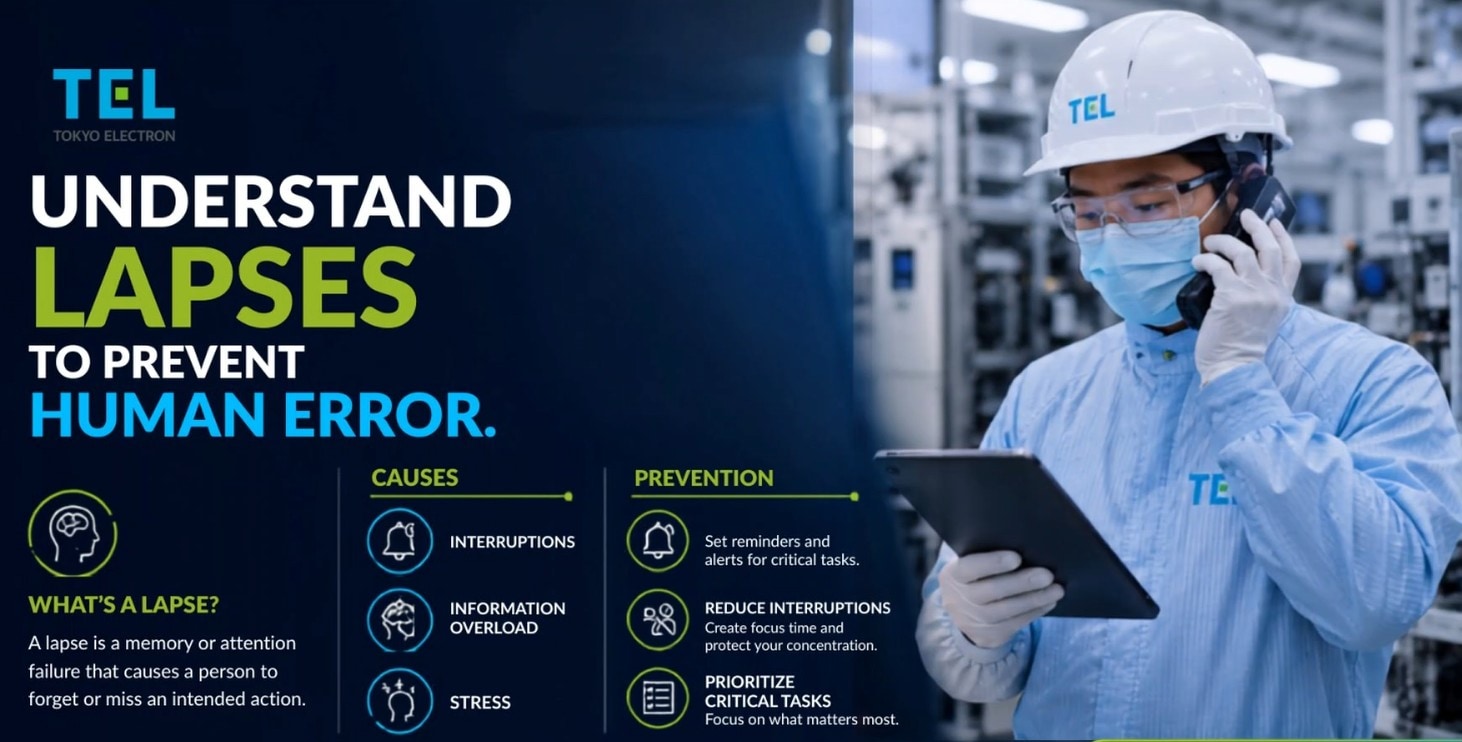
PC lock screen image
Work Safety
We identify and remove potential safety and health hazards on a continual basis and provide education and training as necessary. In addition, while improving workplace environments based on suggestions by employees, we also implement improvements in the workplace environment through mitigation or removal of labor environment hazards and occupational safety and health risks for pregnant women, nursing mothers, young and elderly workers and all individuals with specified disabilities.
Risk Assessment
We conduct workplace risk assessments every year based on the Risk Assessment Guidelines, which establish a series of procedures for identifying hazards and harmful factors in the workplace, estimating risks, setting priorities, and determining risk reduction measures. We provide feedback on the results as appropriate and use them to improve the work environment, revise work rules, and incorporate them into the safe design of equipment. We also conduct risk assessments of equipment and products based on our technical standards for hazard assessment. We provide feedback on the results to each development department as appropriate and use them to enhance the safe design of equipment. In addition to these improvements, we are also continually reviewing equipment maintenance manuals and improving the way chemical substances are handled in various types of equipment.
Safety Audits
In addition to regular internal audits, we implement special audits conducted by specialized groups to analyze incidents and ascertain the actual conditions at the site in the event of a major incident. We also conduct safety-focused audits at each Group company and at the relevant facilities to improve working environments.
Incident Reporting System
Accessible to all employees, the TIRS* is used to quickly share information with the relevant personnel, confirm the current situation, and implement recurrence prevention measures. As a rule, incidents must be reported within 24 hours. Also, information on incidents and near-misses and hazards gathered through TIRS is stored in a database where the data is made visible from various angles and utilized for analyses on incident causes and trends using the Safety Dash Board application.
TIRS is Tokyo Electron Group’s TEL Incident Report System. The system is also used with all Group companies for report data aggregation, investigation of causes, analysis of trends and impacted personnel, and other activities as a recurrence
Near-Miss and Hazard Reporting
Reporting near-misses and hazards in addition to incidents is mandatory through TIRS and are shared in a timely manner with parties concerned. We send out training videos via email on examples of past incidents and post them on the intranet for employees to access to prevent incidents.
We provide multilingual reporting for near-misses and hazards, helping to raise safety awareness among all employees.
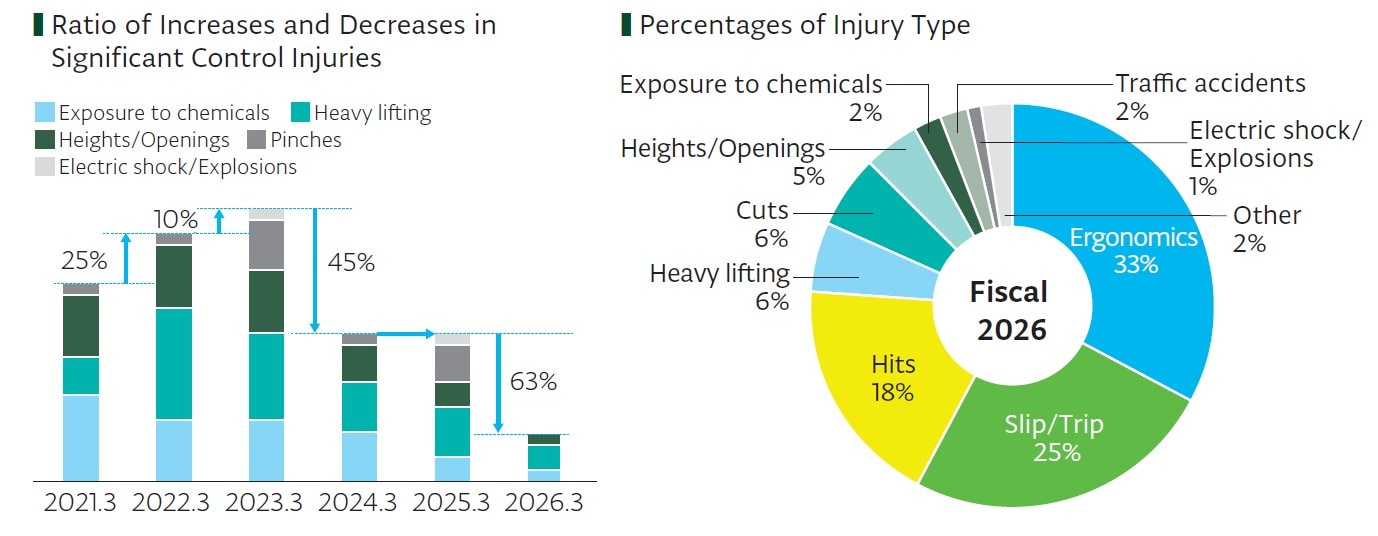
As a new initiative, we are also conducting awareness activities using digital signage. Displays installed in the halls and entrances at each site feature examples of incidents, near-misses, and hazards reported through TIRS, further raising safety awareness. As a result of these ongoing initiatives to reinforce safety worldwide, our LTIR*¹ in fiscal year 2026 was 0.36 and our TCIR*² reached 0.22, which is top class in the semiconductor production equipment industry.
We are also furthering efforts to prevent significant control injuries through Stop Work*³ retraining and strengthening onsite inspections.
Digital signage hazard display example
LTIR: Lost Time Incident Rate. Lost time incident rate per 1,000,000 work hours
TCIR: Total Case Incident Rate. The number of work-related injuries per 200,000 work hours (TCIR)
Stop Work: A term used in safety guidance to prevent incidents. It refers to the practice of suspending or stopping work when an event occurs that differs from what was originally anticipated and confirming a safe and reliable course of action.
| Data Concerning Safety | FY2022 | FY2023 | FY2024 | FY2025 | FY2026 |
|---|---|---|---|---|---|
| *¹ LTIR: Lost Time Incident Rate. Lost time incident rate per 1,000,000 work hours (LTIR) | 0.66 | 0.83 | 0.31 | 0.32 | 0.36 |
| *² TCIR: Total Case Incident Rate. Number of workplace injuries per 200,000 work hours (TCIR) | 0.30 | 0.33 | 0.15 | 0.23 | 0.22 |
Safety Training
Safety Foundation Training and Safety Technical Training
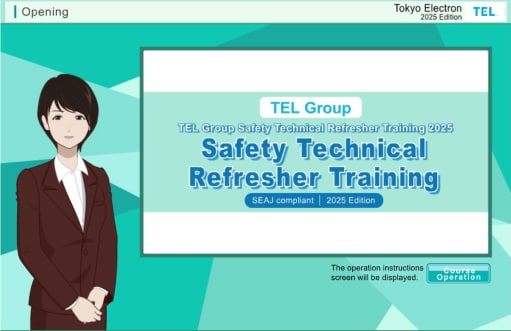
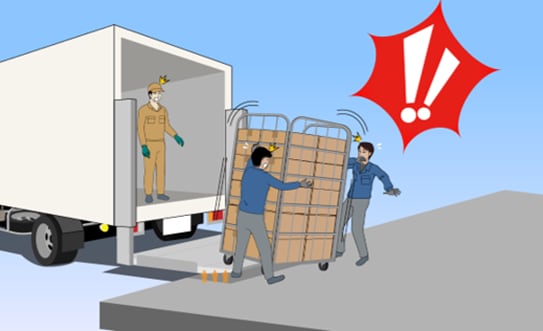
We offer safety foundation training and safety technical training as the two main programs for raising awareness about safety among employees and to create a safe workplace. As a compulsory training, safety foundation training teaches the basics of safety to enable all employees to perform their operations safely in the workplace. We carry out introductory training for new hires and are working to improve employees’ retention of safety awareness by providing refresher training once every three years.
Safety technical training is a specialized program for engineers working on production lines or in cleanrooms. The contents are renewed annually, and refresher training is carried out each year.
Percentage of employees who received training on safety
| FY2022 | FY2023 | FY2024 | FY2025 | FY2026 | |
|---|---|---|---|---|---|
| Safety foundation training | 100 | 100 | 100 | 100 | 100 |
| Safety technical training | 100 | 100 | 100 | 100 | 100 |
Training for Overseas Transferees
For overseas transferees, we compare the laws and regulations in their previous and future places of employment and provide additional safety training as necessary. Additionally, training about safety rules and legislation in each country and region is provided.
Enhancement of Training Facilities
Tokyo Electron Korea established the TEK Safety Academy in fiscal year 2024 to raise employee safety awareness and enhance their incident prevention skills through practical hazard experience. The slogan followed is "Watch, Try, Feel and Experience Safety First." The facility is dedicated to safety training and is equipped with experiential training equipment and a large conference room that can accommodate 60 people. Training is also conducted to confirm the effectiveness of protective equipment.
Furthermore, Tokyo Electron Shanghai has a training center allowing practical training programs with a focus on experiential training (e.g. LOTO* simulation, heavy lifting).
LOTO: Lock Out Tag Out is a safety procedure used to prevent incidents and injuries that may be caused by the unexpected release of energy from facility or equipment.
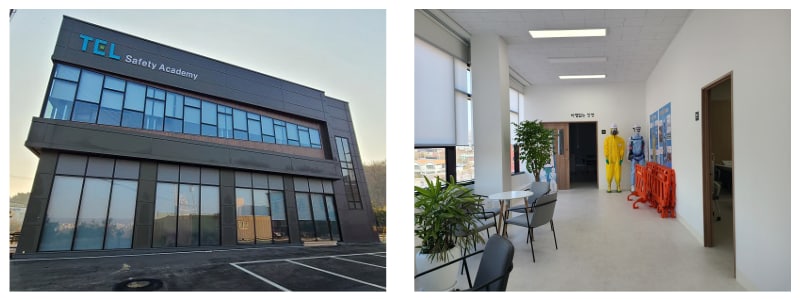
TEK Safety Academy
Use of VR and AI
In addition to experiential training such as lifting heavy items, we also offer VR training simulating incidents involving falls from heights and exposure to chemicals substances. To prevent the recurrence of ergonomics-related incidents, which account for the largest number of reported incidents, we have introduced AI-based posture analysis software and are advancing recurrence prevention activities. We analyze the causes of and methods for improving more than 50 types of work that place strain on the body and deploy optimal measures for similar work performed at Group companies, such as optimizing working postures and reducing physical strain.
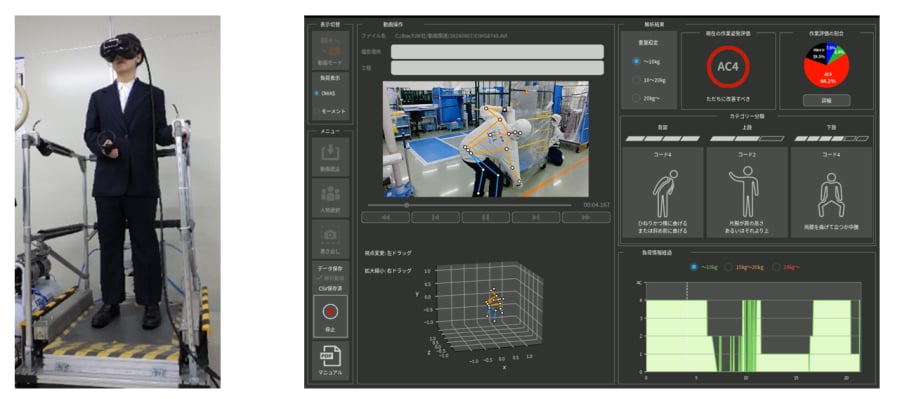
Image of experiencing a falling incident AI-based posture analysis software
Product Safety
Safe Design of Equipment
We develop products based on the inherently safe design*¹ approach. We conduct risk assessments from the product development stage and strive to reduce the risk posed to humans by reflecting those results in the design. Additionally, we conduct compliance checks through third-party assessment bodies to ensure conformity with international safety standards and SEMI Standards*².
Furthermore, we conduct global surveys on increasingly strict laws and regulations and strengthen our collaboration and frameworks with overseas subsidiaries so that we can respond appropriately to the safety regulations in each country and region to which we ship products.
Inherently safe design: A design concept that eliminates the cause of the machine’s harm to humans through the safety design of the machine
SEMI Standards: SEMI Standards are regulations formed by SEMI, an international industry body which serves manufacturers of semiconductor production equipment, display production equipment, PV power generation equipment, materials and the like, to unify all of these international industrial standards.
Provision of Safety-Related Information
We are committed to providing sufficient safety information on our products so that customers can safely use them. All our products come not only with a manual specific to the product specifications, but also a TEL Safety and Environmental Guidelines applicable to all our products. The TEL Safety and Environmental Guidelines is available in 12 languages* to ensure that customers around the world can understand the content accurately; it describes examples of potential risks associated with using our products together with the methods for averting those risks, as well as safety measures applied to products and recommended methods for product disposal, divided into such categories as chemical, electrical, mechanical and ergonomic.
If new safety warnings are identified after a product ships, we promptly report these to the affected customers.
We also ensure that necessary information is communicated to customers to whom we deliver products that involve the use of particularly hazardous chemicals or high-voltage electricity.
12 languages: Japanese, English, German, French, Italian, Dutch, Russian, Portuguese, Korean, Traditional Chinese, Simplified Chinese and Finnish
Feedback on Equipment Safety Specifications
If changes relating to safety specifications are requested by customers, or if an incident occurs as a result of equipment design, we provide the information to the productdesign department as feedback and have established an organizational structure that will move forward with the necessary discussions as quickly as possible.
Equipment Safety Training
Equipment Safety Training
To entrench inherently safe design* approaches in design through to manufacturing and servicing operations, we conduct safe equipment design training at our manufacturing sites in Japan. We also promote our initiatives to prevent incidents, by providing our suppliers and customers with safety information as circumstances demand.
Inherently safe design: A design concept that eliminates the cause of the machine’s harm to humans through the safety design of the machine
Response to Disasters and Major Incidents
In the event of an earthquake, storm, flood, other natural disaster, or an incident or major incidents, such as a fire, we will prioritize protecting and rescuing human lives, and work together as one to quickly and calmly minimize losses, restore damage, and prevent recurrence under the instructions of management, based on the Business Continuity Plans (BCP) decided on.
In addition, we are also working on improving the quality of our BCP by conducting regular revisions and updates on our BCP measures according to the operational environment and situation.
For information on risk management and business continuity plans, see Risk Management in the About TEL section.
Evacuation Drills at Each Site
To minimize damage and confusion in the event of a disaster, we conduct regular disaster drills at each site.
At the Fuchu Technology Center, we have been continuously conducting nighttime evacuation drills, and this was the forth drill. Announcements were made in multiple languages so that all employees on the premises could understand them, allowing the drill to be completed smoothly without significant confusion. Tokyo Electron Shanghai conducted training on putting on and removing smoke protection masks and using fire extinguishers in conjunction with an evacuation drill, helping to raise awareness of disaster preparedness and promote the acquisition of appropriate knowledge and actions. Tokyo Electron Kunshan also conducted an unannounced nighttime evacuation drill to assess employees’ emergency response capabilities.
Our other Group companies also conduct evacuation drills during the daytime and after sunset to improve their emergency response capabilities.