Sustainable Logistics for a Decarbonized Society: Tokyo Electron’s “Trade‑On” Modal Shift
Culture
The logistics industry is at a major turning point as it faces challenges such as decarbonization and labor shortages. Tokyo Electron BP, a subsidiary of Tokyo Electron (TEL), provides logistics services, facility management, and insurance agency services.Tokyo Electron BP has approached logistics reform with a “trade‑on” mindset—seeking solutions that both address problems and generate value, rather than accepting a simple trade‑off that only raises costs. Shinji Muratomi of Tokyo Electron BP, who leads these efforts, talks about TEL’s multifaceted initiatives—such as modal shift* and packaging redesign—and how collaboration inside and outside the industry is shaping the Group’s logistics strategy.
- Modal shift refers to changing modes of transport—for example, shifting from truck or air freight to lower‑impact rail or sea transport.
Profile

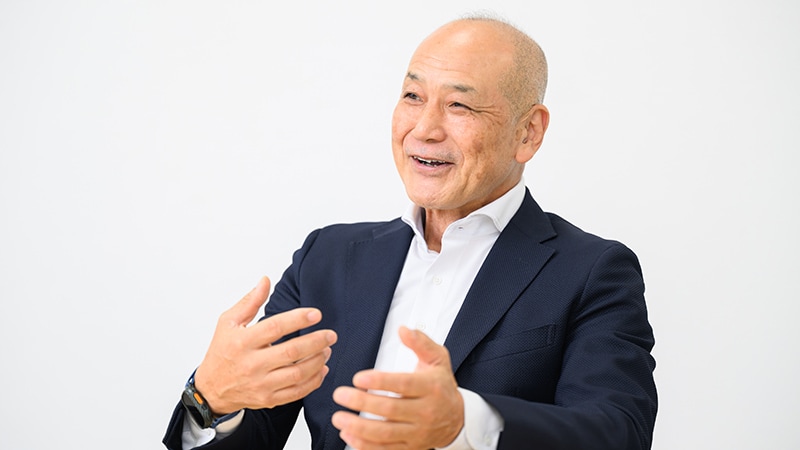
Shinji Muratomi
Director, Logistics Strategy Planning, Tokyo Electron BP. Responsible for the TEL Group’s overall logistics strategy to support TEL’s goal of net‑zero greenhouse gas emissions by 2040. Leads efforts to build a sustainable logistics structure.
Logistics Reform Can’t Wait. Government Initiatives are a Tailwind.
What challenges do you see in Japan’s logistics today?
Muratomi
Since the 2020s began, the environment surrounding logistics in Japan has changed dramatically. The biggest issue is a shortage of truck drivers. By 2030, it is estimated that 30–40% of current freight volumes may no longer be transportable because of shrinking driver availability. Semiconductor‑related products that TEL ships require specialized transport—dedicated trucks and drivers with specific qualifications—which makes the situation particularly severe when combined with retirements and a shortage of successors.
Another challenge is the strong paper‑based culture in logistics, which is slowing digital transformation. While some major logistics companies have started introducing electronization, paperwork still persists in many places.
And of course, there’s the environmental impact. Logistics that use many vehicles inevitably have a large environmental footprint.
How are domestic companies responding to those conditions?
Muratomi
From April 2026, Japan will require larger shippers to appoint a CLO (Chief Logistics Officer). The CLO is responsible for formulating and executing logistics strategies, improving efficiency, and cutting costs. However, while CLOs in Europe and the U.S. often optimize across the entire supply chain, Japanese CLOs currently tend to operate more as site managers. They rarely yet manage logistics across procurement, production, and sales to achieve cross‑functional optimization. That’s another current challenge for logistics in Japan.
Still, the government’s move to change laws and require CLOs is a sign the industry is entering a period of transformation. We view this as an opportunity to renew TEL’s logistics.
So this is a major moment for reform.
Muratomi
Yes. Even with societal tailwinds, change isn’t simple. Logistics is an indispensable function, but it’s also a cost center that doesn’t directly generate revenue. That makes it difficult to secure a favorable cost‑benefit balance when changing structures. Achieving that balance is one of the biggest challenges.
TEL’s “trade‑on” logistics
What mindset is central to TEL’s logistics strategy?
Muratomi
As a significant shipper, TEL is required to pursue CO2 reductions. Our principle is to avoid simple “trade‑offs” that only add cost to protect the environment. Instead, we pursue “trade‑on” solutions that reduce environmental impact while also creating other benefits.
Reducing CO2 always carries costs, but sincerely addressing environmental issues enhances corporate value. We are currently in a transition phase that emphasizes this mindset. In the next phase, we want to ensure initiatives that will also deliver financial upside. Measures that only add cost are hard to sustain, so creating mechanisms that produce tangible benefits is essential to continuing our environmental efforts.
What specific “trade‑on” measures has TEL implemented?
Muratomi
One example is packaging. Export packaging has traditionally used wooden frames or steel, which have their own recycling burdens.
Since 2021, we have been shifting to reinforced corrugated cardboard. It can be reused at an 80–90% rate after use, has a lower environmental footprint, and is both strong and lightweight, reducing various packaging‑related burdens. Because some customers found the idea of “cardboard” unsettling, we branded the solution “STW (Strong Triple Wall)” to foster acceptance. By FY2025, we achieved a conversion rate of 34.7% for the full year (43.7% in Q4)*, and replacing wooden frames with STW has contributed to CO2 reductions.
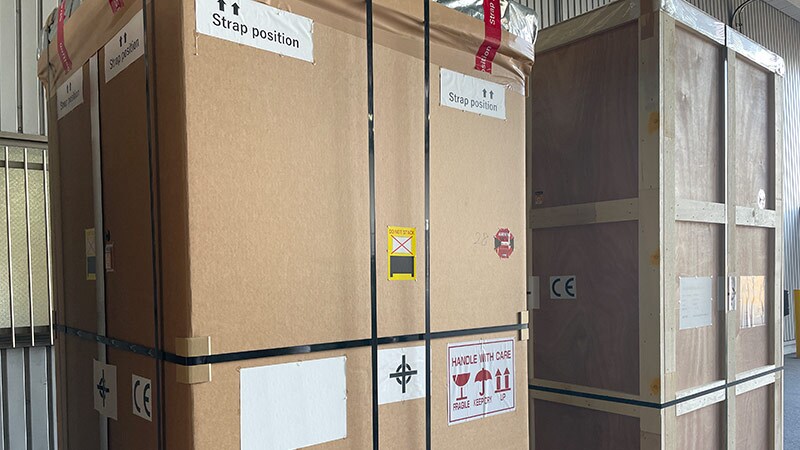
These kinds of measures allow us to talk not only about carbon reduction, but also about cost savings in packaging—an example of trade‑on in practice. Logistics is a treasure trove of opportunities; viewed from different angles, there’s still much we can try.
Modal Shift: High Environmental Benefit with Minimal Operational Burden
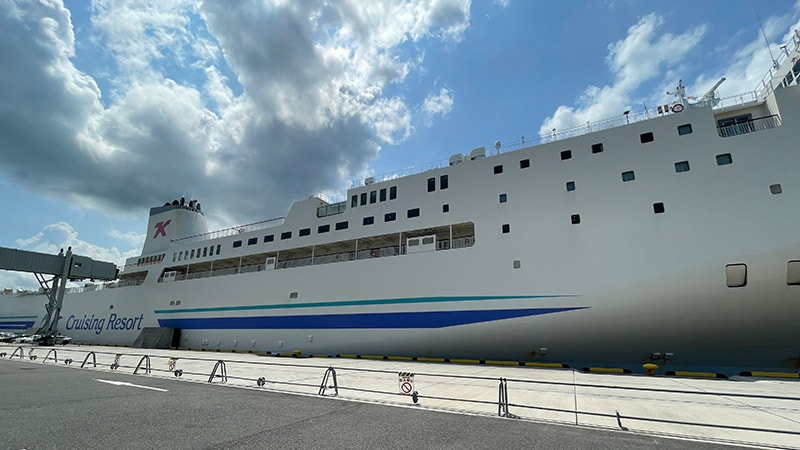
In April 2021, TEL committed to modal shift—reducing truck and air transport in favor of lower‑impact rail and sea transport. Where did modal shift fit into TEL’s logistics strategy?
Muratomi
When TEL began committing to decarbonization, after reviewing packaging, we first tackled domestic modal shift because it was a practical measure we could implement without fundamentally changing current operations. A simple analogy is switching from commuting by buy to commuting by train: if the train is scheduled and travel time is the same, your morning routine doesn’t change.
It took effort to set up the initial shipping lanes, but through communication with various ferry and shipping companies, we were able to establish reliable services. Our priority was to avoid extending lead times. If delivery can be made within the same lead time, the burden on the production and shipping sites doesn’t change whether they use trucks or ships—making it easier for the workplace to accept the change.
Did implementation go smoothly?
Muratomi
As with most logistics initiatives, once operations get started, things run smoothly. But smooth acceptance requires careful communication both internally and externally. Without internal understanding, even changes that minimally affect day‑to‑day operations will struggle to take root. We explain the benefits thoroughly, ensure the change does not create risks for related departments, and support the sites through the transition. Early on, I told people, “If anything goes wrong, call me,” and served as the contact between the shipping companies and TEL to ease the shift.
What are challenges in promoting modal shift?
Muratomi
It’s not so much a Japanese problem as a general constraint of transport modes*: each has size limits. Depending on the size of the freight, certain modes may be unavailable, and the size and shape of semiconductor production equipment can make it difficult to shift from road to ship or rail. The same applies to international transport, where the available modes in destination countries matter. Because TEL has many overseas customers, having packaging dimensions that can be handled by multiple transport modes would allow us to choose the most environmentally efficient option.
For example, airfreight has height restrictions that vary by aircraft type. Ships can carry larger dimensions, so today we often adopt mode‑specific packaging sizes. For items that can fit on multiple modes, if we can determine common dimensions that work for air, sea, and rail and establish rules for sharing that information, transport efficiency would improve significantly.
- Cargo transportation methods. They are mainly classified into four categories: truck, ship, rail, and air.
Building New Measures Incrementally—Defending yet Offensive
TEL has set a net‑zero target by 2040. As of 2025 you’ve achieved roughly 30% of that target. What challenges remain to cover the remaining 70%?
Muratomi
Since our 2021 commitment, modal shift has advanced our progress considerably. However, there are few remaining ferry routes that can still be introduced. If we switched all our fuels to renewable or other non‑fossil options, we could probably achieve the remaining 70%, but costs would rise roughly sixfold. We therefore need to find measures that steadily reduce CO2 without dramatically changing current costs or operations.
Are there specific new measures under consideration?
Muratomi
Twin‑trailer (W‑link) trucks are a realistic option. By connecting two 10‑ton trucks, one driver can handle the load of two vehicles. It will be a solution for the severe driver shortage. The downside is that such specialized vehicles limit the number of receivers who can accept them.
From here, we’re entering a “multi‑pathway” phase: rather than expecting one single measure—like ferries—to deliver large gains, we will combine various transport modes, fuels, and systems to accumulate reductions step by step. That means introducing W‑link trucks and developing ways to get them accepted, searching for new low‑energy vehicles, and so on. We are experimenting and iterating.
Because there are limits to what a single company can do, collaboration beyond company and industry boundaries is essential.
What kinds of partners are you working with?
Muratomi
Within the Japan Semiconductor Equipment Association (SEAJ), where TEL is a member, a logistics working group has been holding study sessions and established a logistics committee to enable industrywide coordination. We are building a structure to take collective action. We also want to engage with other industries to solve shared problems—logistics is an issue that transcends industry boundaries.
As a leader in the semiconductor industry, what responsibility does TEL feel in these efforts? What can TEL uniquely do?
Muratomi
Logistics and cost issues around logistics aren’t solved overnight—many of the necessary measures are difficult to implement. That’s why it’s important for a leading company like TEL to take on the challenge and show leadership inside and outside the industry. Because TEL can be bold, we are able to try something new so that others can follow. When we take the lead, other companies sometimes follow our example.
First, TEL will do the hard work of applying its expertise and rolling out multiple initiatives. If those efforts still fall short of our targets, we may need to engage with governments and international bodies to find the right balance between cost and goals. Going forward, as an industry leader, we will continue to stack up measures that both defend our business and allow us to take proactive steps toward decarbonization.
Share