Supporting Employee Career Development: A Cross‑Department Job Posting Program
Culture

Tokyo Electron (TEL), a leading company in the semiconductor industry, provides various support to foster each employee’s growth and ambition. In this article, we introduce a new initiative launched by the TEL headquarters: the Job Posting System, which allows employees to work in other areas while keeping their primary roles.
The program is a system designed to promote cross-departmental interaction, support career development, and employee networks. Takashi Iida, HR Business Partner (HRBP) of TEL, talks about the background and early results of this initiative.
Profile

Takashi Iida
Expert, HRBP Group, Human Resources Department, Tokyo Electron. Joined Human Resources Department, Tokyo Electron in 2019. Iida leads an HRBP team responsible for the Global Business Platform (GBP), Finance, Corporate Strategy, and Business Design Strategy divisions.
Creating a System that Benefits Both the Business and Individual Careers
Why the Job Posting Program was introduced across the headquarters and some business units (BU)?
Iida
TEL has grown rapidly in recent years. In the TEL headquarters, both new graduates and experienced professionals from diverse backgrounds are joining us.
As a business grows and an organization expands, departments and functions tend to have become more specialized. At our company as well, it became harder to learn about and connect with other teams through daily work, and to feel connected with other employees. As we have hot desking at our Akasaka office, I’ve even heard stories that people who sat next to each other didn’t realize they were in the same team. The shift to remote work during the COVID-19 pandemic also led to this.
In that kind of environment, collaboration between employees and teams becomes more difficult. As a company with a shared vision, we need to facilitate better coordination. Even if we communicate and work smoothly, achieving more advanced and collaborative work as a team requires cross-departmental understanding and interaction.
Since the company will continue to grow and expand in size, it was urgent to create a system that enables employees to voluntarily expand their networks and enhance their careers. That led to the Job Posting Program,which enables employees to take on roles in different departments while continuing their work in their current organization.
What are the program’s main objectives?
Iida
The goal is to provide employees with opportunities to support their autonomous career development, broaden employee networks, and generate cross-organizational outcome.
To build networks, deepen mutual understanding between departments, and expand career possibilities, there’s no substitute for working together with people you don’t normally interact with. Working together does more to shorten distances and foster deeper understanding than one-time networking events or study sessions.
In fact, about three years ago, a similar program was already introduced within some departments—like IT and Legal/Compliance, where employees explored different roles within related specialties in the same unit. As we identified employee needs and gained operational know-how gradually, we expanded the program and opened up positions beyond the divisions at TEL headquarters from last year, aiming to promote even greater mutual understanding and career development.
When the program was first introduced within the unit, it started with about eight departments and roughly 200 eligible employees; currently, the program covers about 25 departments and over 700 employees.
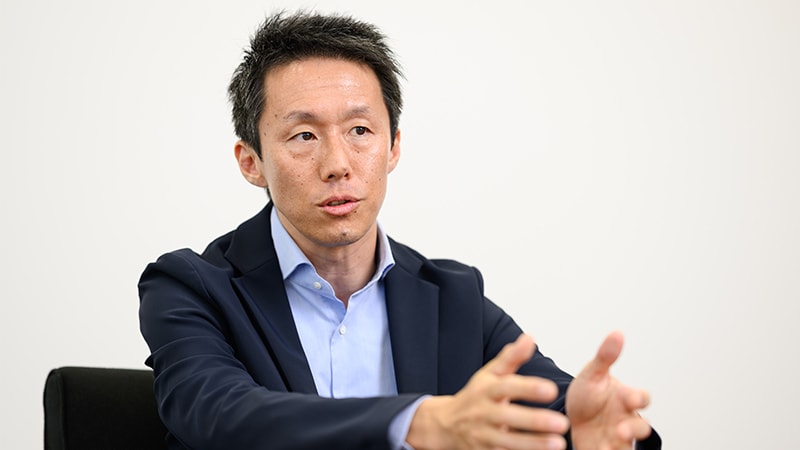
To Enhance Cross‑Team Contribution and Skill Development
Can you explain the program flow? How does HR support it?
Iida
The HRBP team coordinates and supports every step of the Job Posting Program throughout the process.
First, HRBP and the recruiting department collaborate to create a job posting that outlines the role and application requirements. We then hold web briefings and schedule individual meetings for employees who express interest to promote mutual understanding between an applicant, the department, and HR. These sessions cover not only the details of specific tasks, but also basic information about the department. The process itself is a part of mutual understanding.
The selection focuses on applicants’ motivation and skill fit. Because this is a concurrent-role program, not a transfer, participants keep their primary responsibilities. The concurrent role is also evaluated, it is very challenging both for the individual and for the department. That’s why we carefully confirm applicants’ intent and coordinate with their primary supervisors before making final offers.
How do participants actually work after being selected?
Iida
Assignments typically last from a few months up to about a year. Work arrangements are negotiated between the primary and host departments. We discuss busy periods in the primary role and confirm with applicants when and how they want to start. To ensure meaningful outcomes for both the host team and the participant’s career, we ask participants to allocate around 10–20% of their time to the concurrent role. When the period ends, we hold a review interview to wrap up the experience.
At the evaluation period, a performance review is held with the supervisor of the concurrent department. Management from both departments also review the evaluation to align on career development and the future roles.
What kinds of postings have appeared so far?
Iida
Since rolling out across headquarters about a year ago, we have conducted four recruitment rounds and received over ten requests for various positions, including BU data analysis, business improvement, IT system development, information security, global meeting planning, and communications.
What these roles have in common is that they deliver greater value when filled by people who already understand the company well. Although some roles are highly specialized, many provide opportunities for participants to apply experience gained in their primary positions at TEL.
What kind of employees tend to apply?
Iida
Since the program is volunteer-based, applicants are highly motivated. Common reasons include “I want to apply my experience to different work” and “I want to acquire skills needed to perform better in my current department.”
We’ve even had a general affairs employee join the corporate blog team through the Job Posting: they said they wanted to shine a light on niche work areas that aren’t widely known even within TEL.
Are there any challenges in rolling out the program?
Iida
Even if the applicant is motivated, members of their current department may worry that they want to transfer to another team or that it could affect their main work. We fully understand their feelings, especially because it involves concurrent roles.
However, once people understand the program, they can see the benefits for their own departments.We aim to create an environment where open communication can take place about the benefits that cross-organizational experience brings to both the employee’s career and their home department. We need to raise awareness of employees with the Job Posting experience so that they can be one of role models. It is a key challenge for the HR team.
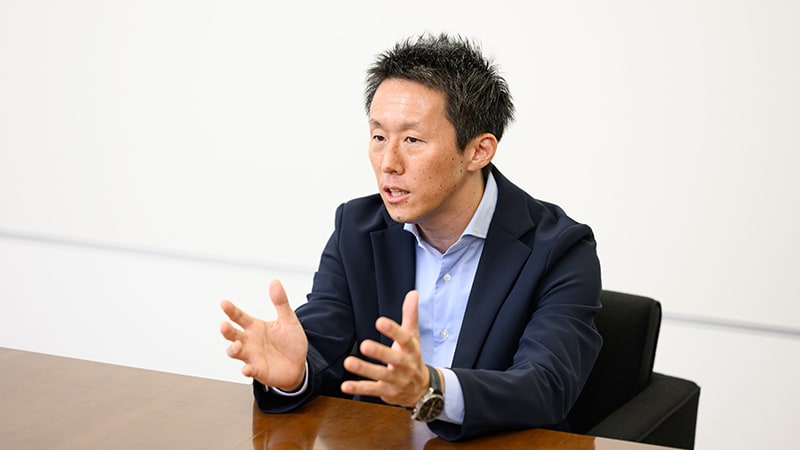
To Raise Awareness and Further Energize Collaboration
After a year since the program’s launch, are you seeing any effects?
Iida
The first group of the Job Posting has just ended, and we’ve been conducting review interviews. Because we’re placing specialists from different areas into other departments, there have been a range of insights and new connections reported.
Do you plan to update the program to support further career development and new organizational outputs?
Iida
First, we want to increase the number of postings and create many success stories that address business challenges and foster career development. Also, we want to create an atmosphere where departments naturally think, “Bringing someone in from another area would have a positive impact on our team,”or "Employees return to their home departments having grown significantly.", and start posting on their own.
To do that, we need to raise the program’s visibility. Those who participate once see its value, but if only the same people keep using the program, it won’t achieve its broader goals. We want to increase the number of postings and ensure as many people as possible can take advantage of this opportunity.
Finally, what future do you hope this initiative will help create?
Iida
Ultimately, the ideal situation would be to create an workplace that encourages spontaneous interactions to emerge organic collaboration and empowers employees to take initiative in problem-solving even without these support.
At TEL, we believe that “our corporate growth is enabled by people, and our employees both create and fulfill company values.” That’s why we believe career development is most effective when employees think for themselves and take action. To support this, it is essential for the company to provide opportunities to employees. When individuals gain diverse experiences and broaden their perspectives, it benefits how the organization is run. We want to continue enriching the volunteer-driven opportunities that TEL uniquely offers, so more people can raise their hands and take on new challenges.
Share