Semiconductor Devices Shaping the Future — The Powerful “Unsung Heroes” Enabling Our Lives
Technology

What is the hardest thing in the world to make—but also absolutely essential for society’s progress?
When we asked an AI tool, it answered with the following: semiconductors.
Smartphones, AI, self-driving cars, massive data centers—all of these rely on tiny components called semiconductors. Yet, we rarely get to see or really understand what semiconductors are. While people may understand they enable the functioning of cutting-edge technologies, most do not know much about semiconductors themselves, rather they remain somewhat mysterious .
Even if they’re hard to grasp, semiconductors are deeply connected to our society, economy, and future. By learning even a small amount about them, the news and everyday topics we hear might suddenly make a lot more sense. With the goal of getting a basic grasp, let’s take a closer look at semiconductors.
What exactly is a semiconductor?
Semiconductors can be simply summarized by the following three characteristics.
1. Semiconductors are the brains and eyes of electronic devices, and they are essential components. 2. A semiconductor is a material with electrical conductivity between that of a conductor and an insulator. 3. Utilizing this characteristic, semiconductors perform the storage and processing of electronic information, such as data.
From AI, GPUs, cars, computers, smartphones, to data centers, semiconductors enable all kinds of technology, and at their core, they operate on this mechanism.
There are various types of semiconductors that utilize this mechanism. Among them, the four most well-known and important types are the following.
1. CMOS Image Sensors
Among the various types of semiconductors, CMOS Image Sensors stand out as key players in recognizing images and converting them into useful formats. You’ll find them in countless products with cameras, ranging from smartphones, surveillance cameras, automotive systems, to medical devices. CMOS Image Sensors do not just capture visuals; they are crucial for transmitting various types of information as well:
- Object Recognition: In autonomous vehicles and surveillance systems, these sensors identify pedestrians, vehicles, and signs, estimating distance and movement.
- Quality Inspection: In industrial applications, CMOS Image Sensors serve as precision monitors for product inspections and defect detection.
- Biological Information: CMOS Image Sensors are utilized as sensors to observe minute structures and acquire biological information, such as in microscopes and endoscopes.
It's clear that these sensors play an important role in advanced fields that are indispensable for the future.

2. NAND Flash Memory
The semiconductor responsible for "permanently storing" data is NAND Flash Memory. Despite being a small semiconductor built into smartphones, it can store thousands of photos and videos, functioning like a pocket-sized data center. Thanks to its fast data reading and writing capabilities, you can save photos and music instantly, watch videos without stress during playback, and launch applications quickly—all made possible by NAND Flash Memory. Since data is retained even when the power is turned off, you can confidently store your photos and videos.
NAND Flash Memory has evolved from 2D (planar) to 3D (vertical) structures. Just as the number of residents increases when moving from a single-story house to a high-rise apartment building, the capacity for stored data continues to grow as we evolve from 2D to 3D formats. Currently, it has evolved to about a 200-story building, and it is astonishing that there is a roadmap suggesting evolution to over 1,000 stories in the near future.
The "3D NAND" is used heavily in the latest smartphones, servers, and data centers. The demand for data centers driven by the evolution of AI is significantly related to "3D NAND" as well.

3. DRAM
DRAM stands for Dynamic Random Access Memory, and it is commonly referred to as "DRAM." It is a type of semiconductor that specialized in temporary data storage and high-speed data transfer. In simple terms, it acts as a delivery and storage provider for data. Its features include the capability of high-speed and efficient reading and writing of large volumes of data. However, the stored content is lost after a certain period or when the power is turned off. It plays a supporting role, transferring necessary data or temporarily storing it near Logic semiconductors, which handle complex processing such as CPUs and GPUs.

As is often highlighted in the news, one of the DRAM types attracting attention as a semiconductor that enhances AI is HBM (High Bandwidth Memory). The mechanism involves stacking multiple DRAM chips in 8, 16 layers, etc., increasing the pathways for data to travel and allowing for more data to be transferred simultaneously. HBM performs high-speed and efficient reading and writing of large volumes of data and supports Logic semiconductors next to it. The evolution of HBM greatly influences the advancement of AI.

4. Logic
Logic devices, as the name suggests, are "devices that govern logical operation." They function like our brains, making judgments and deriving answers. The smaller the device size, the higher the performance.

We commonly hear about GPUs and CPUs in daily life. Both are logic devices, but their task and structure are different. Parallel computation of large amounts of data = GPU. Sequential processing of complex data = CPU. They leverage their respective features and collaborate to support our comfortable lives. Logic Semiconductors are essential for supporting future technologies.
-
GPU (Graphics Processing Unit)
- Specializes in parallel processing of vast amounts of data simultaneously.
- Contains hundreds to thousands of "cores," which act like the brain.
- Each core shares the workload by processing data concurrently.
- Initially used to rapidly process and smoothly display graphics in games and other visuals.
- Its ability to handle massive parallel data processing is similar to that of AI deep learning, catching the attention of AI developers, leading to its actual usage.
- The evolution of AI requires many highly efficient GPUs.
-
CPU (Central Processing Unit)
- Specializes in processing complex tasks in a sequential manner.
- Executes each instruction accurately and in order, ensuring that there are no contradictions between instructions and results.
- Contains a few to several dozen "cores" which act as the brain.
- Although the number of cores is fewer than GPUs, each core is powerful enough to handle complex tasks.
- In PCs and smartphones, the CPU is responsible for running various applications like Excel, Word, and internet browsers on the OS.
Semiconductors and Sustainability: Achieving Net Zero
Semiconductors are deeply connected to energy consumption. For example, logic semiconductors—used for computing, as introduced in the previous chapter—consume more energy as their processing becomes more advanced and large-scale. This increased energy consumption generates heat, which also requires additional energy to cool the devices. A challenge for the entire semiconductor industry, is the growing need for semiconductors that are more energy efficient.
At TEL, we offer a wide range of semiconductor production equipment and are actively developing equipment to produce high-performance semiconductors with low power consumption. Additionally, TEL aims to achieve net-zero for scopes 1, 2, and 3 emissions by 2040.

Aiming for a digital society while protecting the global environment, semiconductors will continue evolving to lower power consumption while also increasing speed, capacity and reliability. As digitalization accelerates with AI, IoT, and 6G/7G networks, semiconductors will quietly but surely shape our future behind the scenes.
To find out more about semiconductors, please refer to the following resources.
Nanotech Museum
A website that explains the principles and history of nanotechnology
-

The Principle of Semiconductor
Basic facts about semiconductors explained in detail, along with glimpses into their progress and applications
-
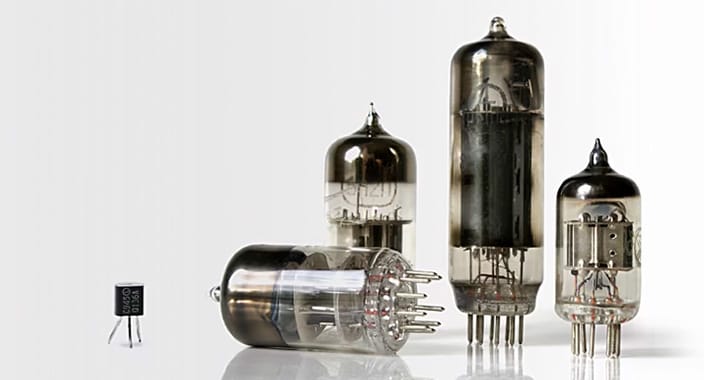
The history of Semiconductor
An overview of the evolution of semiconductors from the invention of the vacuum tube to the present day
-
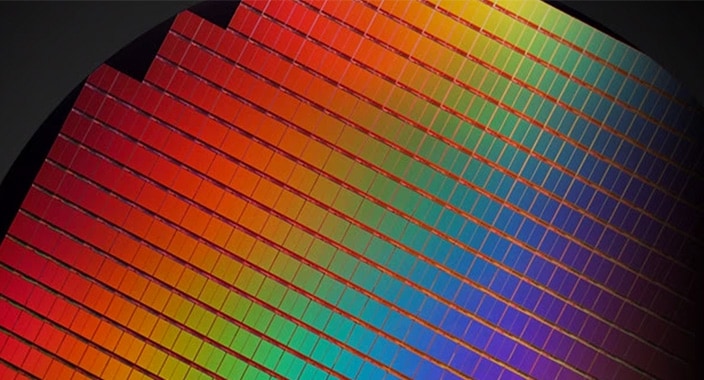
How a Semiconductor is made
An introduction to various processes of semiconductor manufacturing and the equipment designed to perform respective processing steps


Share