Meet TEL “Things that Seem Unrelated will Connect and Create New Value” Shinji Wakabayashi
People

Tokyo Electron (TEL) believes that "Our corporate growth is enabled by people, and our employees both create and fulfill company values." At the TEL Group, our diverse talent work and strive to realize our vision of being "a company filled with dreams and vitality that contributes to technological innovation in semiconductors."
"TEL Master Inventor" is the highest honor in the TEL Group inventor recognition system. This award is given to employees who have made significant contributions through the development of new technologies. Shinji Wakabayashi, TEL Master Inventor 2025, looks back his experience on development as an engineer.
Biography
-
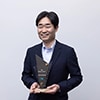
Shinji Wakabayashi
Wakabayashi majored in Electrical Engineering and joined TEL in 1992. He worked as an electrical engineer and later as a system engineer experiencing both corporate and Business Units (BU) departments, primarily engaged in the development of wafer transfer systems for single wafer deposition equipment. Currently, he serves as the Head of Tokyo Electron Equipment Development Department. To date, he is an inventor with 88 registered patents both in Japan and overseas. Additionally, Wakabayashi has held the position of patent manager, while focusing on patent measures and nurturing the next generation talent.

The Mission of Wafer Transfer System
“As the Equipment Development Department of Corporate Division, one of our missions is to develop elements of next-generation transfer system, while ensuring alignment with the development roadmap with BU. We are also exploring concepts for next-generation system. As a part of our cross-BU activities, we are hosting an internal summit as well. In a wafer transfer system, it is important to automatically transport wafers quickly to the accurate position in three dimensions, without producing waste. We also need to consider that wafers must be handled gently in high temperature and vacuum environments, without producing waste and putting strain on the environment, while considering costs. This is not limited to transport system, but as there are many requirements, it’s quite challenging.
It is necessary to ensure ease of maintenance, compatibility with existing models, and compliance with environmental laws and regulations. If any one of these features is not met, customers will not accept the system. It is difficult to strike the balance. Having said that, a device that is just average in every aspect will not sell, so a concept that transcends is necessary. It's important to have both macro and micro perspectives. In the future, it is expected that the transformation to autonomous equipment using AI will progress, and it will also be required to apply this to the control of wafer transport systems. To depend on AI for making control decisions, we could face some challenges such as the validity of the thresholds determined by AI as well as quality assurance. But, if those challenges are overcome and we accumulate a track record, it will become a reality that we rely on AI.”
Challenges Led to Patent Applications
“Since I joined TEL in 1992, the most impressive development is corrosion protection. It was a lot of demanding work. As we didn’t have knowledge and experience, and even a slight change in the process would completely change the phenomenon, it was not easy to verify how far we should go. There were almost no case studies in the company, and it was completely different from my background. Together with the people around me, including my boss and colleagues, we struggled for around three years. As our knowledge and actual data eventually increased, we were able to conduct a development approach that involved a hypothesis and verification process. It was the result of teamwork and how we accumulated our findings. I’ve always enjoyed creating ideas, but through these challenges, the number of patents I filed suddenly increased.”
“Connecting the Dots” - Challenge Yourself and Do Many Things -
During his commemorative speech at the TEL Master Inventor Award Ceremony, he looked back on his own experiences and mentioned the famous quote from Steve Jobs' speech, "Connecting the Dots."
“As I am currently a systems engineer, to understand the structure of the latest devices and challenges in semiconductor miniaturization, the experience and knowledge I gained as an electrical engineer when I joined TEL is so helpful. Ultimately, what we create through the semiconductor process is electrical circuits. It's not possible to know in advance what will be connected. We only know after things are connected. When unrelated things are connected, new value that you never expected can be created. The important thing is to be curious about many thins and try them out. Later, you might find them as “connected dots” in unexpected places.
I have experienced failures many times. In some cases, I succeeded because I kept going never giving up. Because semiconductor production equipment involves a wide range of technical fields, which are complex yet constantly updated, there are a lot of opportunities to take on new challenges if you have the ambition. Here are five things I would like to convey to young engineers.
1. Keep pursuing what you are doing. 2. Expand your horizons. 3. “Connecting the Dots.” 4. Keep up the challenge! 5. It'll all work out!
Of course, this is not everything, but I hope it will be helpful."

Share